Marketing Systems For Small Business
Marketing works best when it's built as a system, not a collection of random posts, not a few ads here and there. It doesn't work as a website sitting on its own, or a CRM that only gets opened when someone remembers, it certainly doesn't work when a set of tools are loosely stitched together.
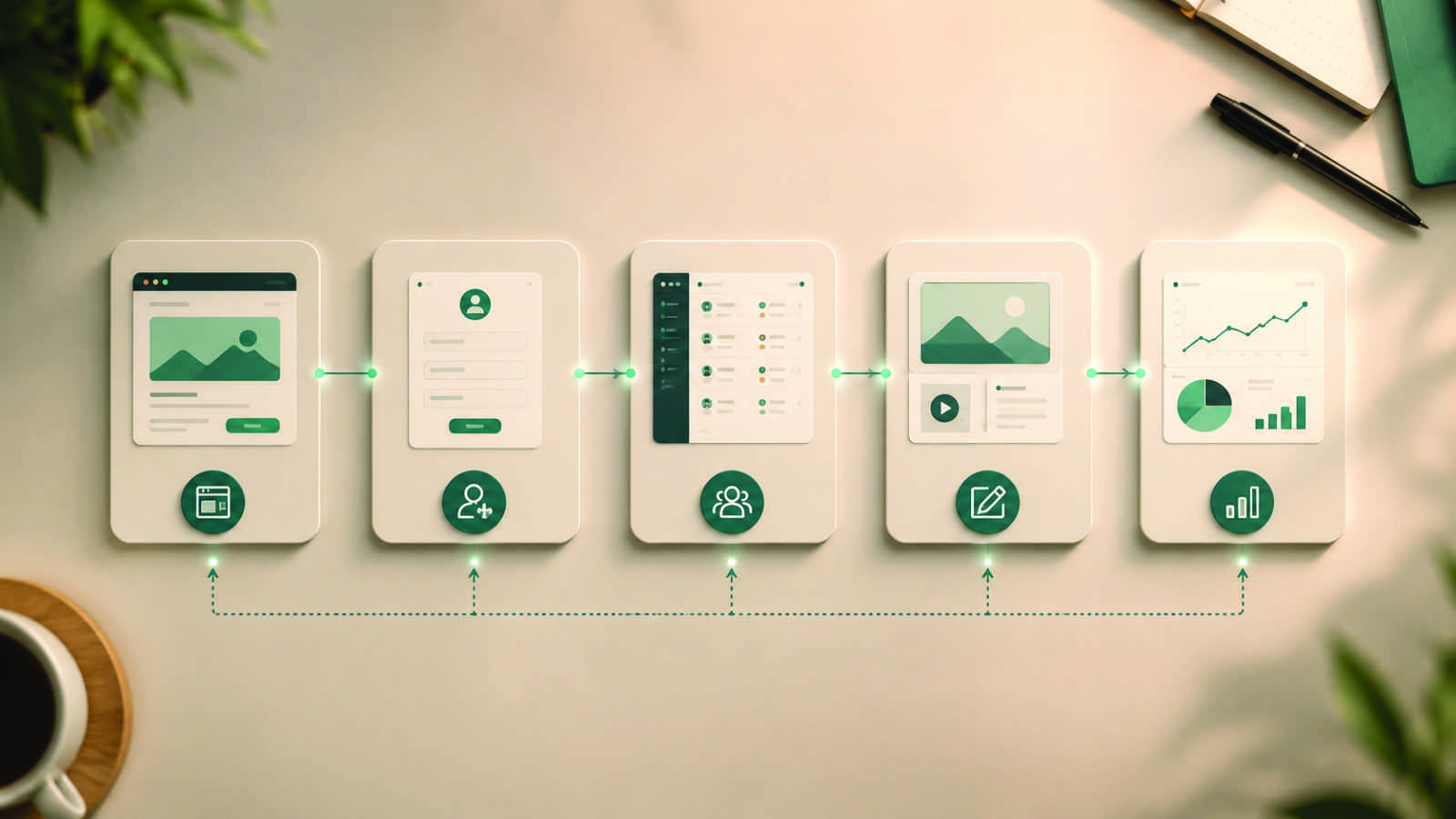
A proper marketing system connects the important parts of your business growth engine: Your website, lead capture, CRM, content, follow-up and reporting.
When those pieces work together, marketing becomes easier to manage, easier to measure and much easier to improve, this is the biggest opportunity for small businesses, founders and lean teams right now. The businesses that build a clear marketing system will be able to move faster, create better content, follow up properly and make smarter decisions without needing a huge internal team.

Feb 17, 2026
What Is A Marketing System
A marketing system is the connected process that helps your business attract attention, capture interest, follow up with prospects and turn marketing activity into commercial opportunity.
It usually brings together five areas:
Website and landing pages
Lead capture and CRM
Content planning and creation
Follow-up and nurture
Reporting and optimisation
The key word is connected.
Each part should support the next, a content post should guide people towards a useful next step. A landing page should capture the right information and a form should feed into the CRM, which should create visibility and follow-up. And the reporting should show what is working.
If you are doing that, that is where marketing becomes a proper operating system for a business.
Why this matters for small businesses
Small businesses usually have to do a lot with limited time and resource. The founder is often involved in sales, marketing, delivery, finance and operations. The team is likely to be lean and budgets more often than not need to work harder.
This is exactly why the system matters.
A clear marketing system gives the business structure, helps reduce manual effort, makes the follow-up process more reliable. Plus it gives content a proper direction, it turns the website into a stronger conversion asset and gives the business a better view of leads, opportunities and performance.
With the right setup, marketing becomes less dependent on bursts of effort and more dependent on a repeatable process.
The Role of AI and Automation
AI and automation have a clear role to play, but only when they are built around the business strategy. The aim is not to add tools for the sake of it, it's to make useful work easier.
That might mean:
turning a monthly business priority into a content calendar
creating first drafts of LinkedIn posts, blogs and emails
summarising enquiries before a sales call
routing new leads into the right CRM stage
triggering follow-up reminders
creating reporting summaries
identifying content themes that are performing well
This is where AI becomes useful, it supports the system and helps the business move faster. It removes friction from repeatable work and gives lean teams more leverage.
The human thinking still matters, so does the strategy and positioning and the offer certainly still matters. The technology is there to help the business execute with more consistency.
The Five Layers of a Strong Marketing System
A practical marketing system does not need to be complex, the best systems are usually simple, clear and easy to maintain. For most small businesses, the starting point is five connected layers.
Website and Landing Pages
Your website is the front door of your business and your marketing system. It should make the offer clear and show who you help. It should explain the problem you solve and guide people towards the next step. A good website gives every important service or offer its own clear path.
For example, a business offering marketing systems, CRM automation and content workflow support should have separate pages for each key offer. That could include:
Marketing Systems Audit
Website + Lead System Build
CRM and Automation Consulting
Content Workflow Setup
Each page should be specific. Who is it for? What outcome does it create? What is included? How does the process work? and What should the visitor do next?
This helps potential clients understand the offer quickly. It also gives search engines a clearer understanding of what the business does.
Lead Capture and CRM
Once someone shows interest, the system needs to capture that interest properly. A website enquiry, LinkedIn message, email or referral should become a visible opportunity. That usually means putting the lead into a CRM or structured contact system. At a minimum, each lead should capture:
name
email
company
enquiry type
service interest
lead source
stage
next action
follow-up date
The CRM gives the business a clear view of what is happening. Who enquired? Where did they come from What are they interested in? Who needs a response? What is the next step?
Once that structure is in place, automation becomes much more useful.
A new enquiry can trigger an internal alert, a task can be created, a confirmation email can be sent. A lead can be tagged by interest. A follow-up reminder can be scheduled. This turns lead management into a process instead of a memory exercise.
Content Workflow
Content works better when it starts with strategy. Instead of asking, “What should we post today?” The better question is, “What do we want to be known for this month?” From there, the business can create a monthly content brief. That brief can include:
audience
offer
business priority
key messages
proof points
customer objections
content themes
preferred platforms
tone of voice
call to action
That single brief can then become a full month of useful content. LinkedIn posts, blog articles, email newsletters, landing page copy, short-form video ideas and sales follow-up messages. This gives content direction.
It also makes it much easier to use AI well because the tool has stronger inputs to work from. The stronger the brief, the stronger the output.
Follow-up and Nurture
Lead generation is only useful when follow-up is consistent. A good marketing system should make the next step clear for every type of enquiry. For a new website enquiry, the process might be:
confirmation email
internal notification
CRM task
personal follow-up
second reminder
proposal stage
nurture sequence if the prospect is not ready
For a guide or checklist download, the process might be:
send the resource
share related insights
invite the person to book an audit
send a case study or example
create a future follow-up task
For a past client, the process might be:
segment by previous project
identify a relevant new opportunity
send a useful update
suggest a review or next step
Good follow-up builds trust, it keeps the conversation moving and it makes sure interest has somewhere to go.
Reporting and Improvement
A marketing system should help the business make better decisions. That means creating a simple rhythm for reviewing performance. You want to know:
which pages generate enquiries
which services create interest
which content themes perform well
which channels bring better leads
which campaigns convert
where follow-up is strongest
what should be improved next month
This does not need to become a huge dashboard project, a simple monthly view is enough for many businesses. Useful metrics include:
website visits
landing page conversion
form submissions
lead source
CRM stage movement
booked calls
proposals sent
deals won
email engagement
content engagement
The value is in the habit.
Review.
Learn.
Improve.
Repeat.
What To Automate First
The best first automations are the ones closest to revenue or time-saving. For many small businesses, that means starting with these areas.
Lead Capture
Every enquiry should be captured clearly and routed to the right place. This is usually the first place to improve because it directly affects commercial opportunity.
Follow-up reminders
A simple reminder system can improve sales discipline quickly. Every open opportunity should have a next action.
Content planning
A monthly content workflow removes the weekly scramble. It gives the business a more consistent presence without adding unnecessary pressure.
Email nurture
A light email sequence can help educate prospects and keep the business front of mind.
Reporting summaries
A simple monthly summary helps the business see what is working and where to focus next. The aim is not to automate everything. The aim is to remove friction from work that should already be structured.
What A Marketing Systems Audit Should Review
A Marketing Systems Audit gives the business a practical view of what is already working and what should be improved. It should review seven areas.
1. Website clarity
Does the website make the offer clear? Are the service pages specific? Is the next step obvious? Is the site built around conversion as well as information?
2. Lead capture
Where do leads come from? Are forms connected to the right place? Are enquiries tagged by source and interest? Is there a clear response process?
3. CRM setup
Is there a visible pipeline? Are contacts segmented? Are follow-up tasks created? Can the business see opportunities clearly?
4. Content workflow
Is there a planning process? Is brand voice documented? Are posts, articles and emails connected to commercial priorities? Can content be created more efficiently?
5. Follow-up
What happens after someone enquires? Are reminders in place? Are prospects nurtured over time? Are past clients being re-engaged?
6. Automation opportunities
Which tasks are repetitive? Which handovers can be improved? Where can manual work be reduced? Which processes can be made more reliable?
7. Reporting
What is being measured? Can the business see which marketing activity creates leads? Are insights reviewed regularly? Does performance data shape the next month’s activity?
The output should be a clear roadmap. What to fix, what to connect, what to automate and what to improve first.
What This Looks Like In Practice
Take a small consulting business that wants more leads from LinkedIn and its website. A simple marketing system could work like this:
The business defines a monthly focus, such as promoting an audit offer.
That focus becomes a content brief.
The brief becomes LinkedIn posts, blog articles and email content.
The content sends people to a dedicated landing page.
The landing page captures enquiries.
Enquiries feed into the CRM.
Each lead is tagged by source and service interest.
The business receives a follow-up task.
The prospect receives a confirmation email.
Monthly reporting shows which content and channels generated the strongest opportunities.
This is simple and that's the point. A good marketing system creates clarity, it helps the business do the right things more consistently.
The Best Setup Depends On The Business
There is no single perfect tool stack. A small business might use:
Webflow, WordPress or Next.js for the website
HubSpot, Zoho, Attio, Pipedrive or Airtable for CRM
Make, Zapier or native integrations for automation
Google Analytics and Search Console for performance visibility
AI tools for content support, summarisation and workflow acceleration
a simple dashboard for monthly reporting
The right stack depends on the business model, budget, team and growth goals. A founder-led consultancy needs a different setup to an eCommerce brand. An events organisation needs a different setup to a SaaS business. A local service provider needs a different setup to a B2B agency, etc. The best system is the one that fits the way the business actually works.
Why this matters now
Small businesses have access to tools that used to be reserved for larger teams with much grander budgets. A lean business can now plan content faster and create better drafts. They can capture leads properly, automate the follow-up, build useful reporting and improve workflows.
The real advantage is that small businesses can now create a more consistent marketing rhythm. However the advantage comes from the way these pieces are connected. Create a sharper website, cleaner CRM, better content workflow, a reliable follow-up process and a simple reporting rhythm. When you put those together, marketing becomes much easier to manage.
How CrisP Digital Helps
CrisP Digital builds practical marketing systems for small businesses, founders and lean teams. The focus is simple:
Stronger content.
Better lead capture.
Smarter follow-up.
Less manual marketing work.
That can include:
Marketing Systems Audits
website and landing page strategy
CRM and lead flow setup
content workflow design
marketing automation
reporting and performance improvement
AI-enabled workflow support
The aim is to help businesses move from scattered marketing activity to a more connected, useful and scalable system.
Ready to improve your marketing system?
The best place to start is with a Marketing Systems Audit. CrisP Digital reviews your website, CRM, lead capture, content workflow, follow-up process, automation opportunities and reporting setup.
You get a practical roadmap showing what to fix, what to connect and where to improve first.
Book a Marketing Systems Audit with CrisP Digital.

Related Stories





Let’s build something that works better together.
Whether you need a new website, stronger marketing, better SEO, CRM implementation or practical AI enablement, CrisP Digital can help.