AI Content Automation vs AI Content Generation: What Actually Works in 2026
Artificial intelligence has changed how content is created. But as we head deeper into 2026, a critical distinction is becoming clear.
There is a difference between AI content generation and AI content automation. Most people use the terms interchangeably. They are not the same thing. And confusing them is the reason so much AI-assisted content feels generic, inconsistent, or disconnected from a real brand.
This article breaks down that difference, explains why prompt-based tools are hitting their limits, and shows why content automation systems are becoming the default for founders, operators, and modern marketing teams.
Feb 17, 2026
Why Most AI Content Feels Generic
If you have experimented with AI writing tools, you have likely experienced this pattern:
The first output looks impressive.
The second is acceptable.
By the fifth post, everything starts to sound the same.
This is not because the models are bad. It is because most AI tools are built around single-use generation, not systems. Prompt-based tools rely on:
Isolated instructions
No long-term memory
No understanding of your broader strategy
No awareness of what you have already published
As a result, the AI has no context. And without context, it defaults to the safest possible output. That is what people describe as “AI slop”.
Generic content is not an AI failure. It is a missing system failure.
What AI Content Generation Gets Right (and Where It Fails)
AI content generation tools are still useful. They solve real problems, they are good at:
Drafting first versions
Expanding bullet points
Rewriting text for clarity
Summarising ideas
Overcoming blank-page paralysis
For one-off tasks, this is powerful, where they fail is scale and consistency. Generation tools struggle when:
You need to post regularly
You care about brand tone
You want cohesion across weeks or months
You need to balance multiple channels
You want content to compound over time
Each prompt becomes a fresh negotiation. You are constantly re-explaining your voice, your audience, your positioning, and your intent. That overhead is why most people stop posting, even with AI help.
What AI Content Automation Actually Means
AI content automation is not about writing faster. It is about removing decisions.
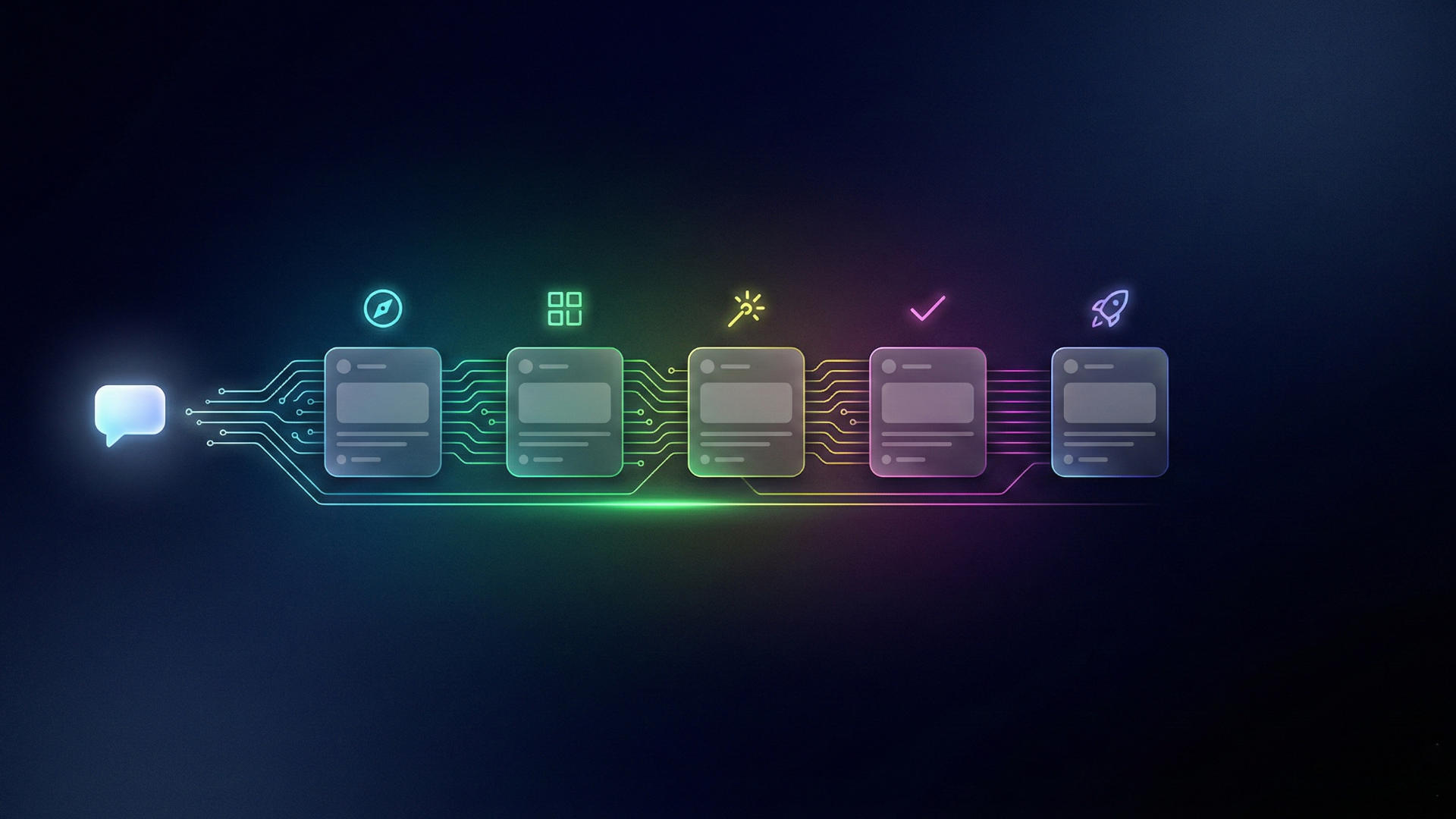
Instead of asking AI to generate one post at a time, automation systems work upstream. They establish structure first, then use AI to operate within that structure.
True content automation includes:
Locked-in brand voice rules
Clear positioning and audience context
Defined content themes
Repeatable post structures
Feedback and refinement loops
Human approval before publishing
In other words, the AI is not the author. It is the engine that executes a strategy you have already defined. This shift changes everything.
The Role of AI Agents in Content Automation
The next evolution of content automation is agent-based systems. AI agents differ from traditional tools because they:
Maintain persistent context
Perform multi-step tasks
Coordinate workflows
Improve based on feedback
Operate across platforms
Instead of asking “write me a LinkedIn post”, an agent-based system can:
Understand your positioning
Select the right theme
Generate multiple variations
Prepare content for review
Adapt future outputs based on what worked
This is the direction modern content systems are moving. Less prompting. More orchestration.
Why Automation Beats Generation for Personal Brands and Businesses
For personal brands and businesses alike, the real challenge is not creativity. It is consistency. Showing up regularly with a clear point of view builds:
Recognition
Trust
Authority
Opportunity
But consistency is fragile when content depends on daily effort. Automation replaces effort with systems. With a content automation approach:
One focused session can produce a full month of content
Voice remains consistent across posts
Topics reinforce each other instead of competing
Content compounds instead of resetting every week
Burnout is dramatically reduced
This is why automation outperforms generation over time. It aligns with how humans actually work.
Where CRISP Content Engine Fits
CRISP Content Engine was built specifically to bridge the gap between AI content generation and true content automation. Instead of prompting for individual posts, users define their:
Brand voice
Expertise
Audience
Positioning
Content goals
The engine then generates an entire month of content in one session, including LinkedIn posts and long-form SEO articles, all aligned to that context. Human approval is built into the workflow, ensuring quality and authenticity.
The result is not more content. It is better consistency with less effort. You can learn more about the system here:

How to Choose the Right AI Content Approach in 2026
Not everyone needs automation immediately. The right approach depends on your goals. Choose AI content generation if:
You need help drafting occasionally
You are experimenting with ideas
You post infrequently
Voice consistency is less critical
Choose AI content automation if:
You want to build a long-term personal brand
You need to post consistently
You care about positioning and tone
You want content to compound
You want AI to support thinking, not replace it
For most professionals in 2026, automation is the logical next step.
The Future of AI-Assisted Content
The future of content is not one-click generation. It is co-creation. AI will handle:
Structure
Drafting
Formatting
Repetition
Scale
Humans will remain responsible for:
Point of view
Judgment
Strategy
Credibility
Final approval
Systems that respect that division will win. Tools that ignore it will continue producing noise.
Final Thoughts
AI content generation changed how people write, AI content automation is changing how people stay visible. The difference is not technology. It is design. If you want AI to amplify your voice instead of replacing it, build a system first. Let automation do the heavy lifting. Keep humans in the loop.
That is what works in 2026.


Related Stories





Let’s build something that works better together.
Whether you need a new website, stronger marketing, better SEO, CRM implementation or practical AI enablement, CrisP Digital can help.